Why is Padua’s garden historically important?
The Orto Botanico was founded by the Venetian Republic in 1545 for the University of Padua. Its original purpose was practical and academic: medical students needed to recognise the plants used in remedies and distinguish them from dangerous substitutes. Living specimens offered a more reliable teaching tool than names repeated through manuscripts. The garden helped make direct observation part of botanical and medical education.
Its original site and basic circular design have endured, which is central to its status as a UNESCO World Heritage property. A circular wall encloses a square divided into quarters, and paths subdivide the planting beds. Geometry imposes clarity on a collection that would otherwise be bewildering. We can imagine the structure as a durable filing system, though the plants and scientific understanding within it have changed repeatedly.
What should we read in the historic garden?
Start with enclosure. The wall protected valuable and sometimes rare medicinal plants from theft, but it also gives the garden a distinct inward focus. Next, look at the beds. Their shapes allow many specimens to be kept separate, labelled and compared at close range. This is a teaching garden rather than an attempt to imitate wild vegetation. Order is not hiding behind scenery; order is the principal instrument.
The collection expanded beyond medicinal plants as botany developed into a discipline with its own questions. Taxonomy, plant geography, ecology and conservation now sit alongside the garden’s medical origins. Historic trees add another layer. The “Goethe palm”, a Mediterranean fan palm planted in the garden in 1585, is associated with Johann Wolfgang von Goethe’s thinking about plant form after he saw it in 1786. The durable point is not celebrity but continuity: one cultivated plant can outlast many systems used to explain it.
Look for the old garden’s operating logic
Compare bed boundaries, label density, water access and the distance from path to plant. Every element supports close identification. It is the opposite of losing ourselves in a simulated rainforest.
What does the Biodiversity Garden add?
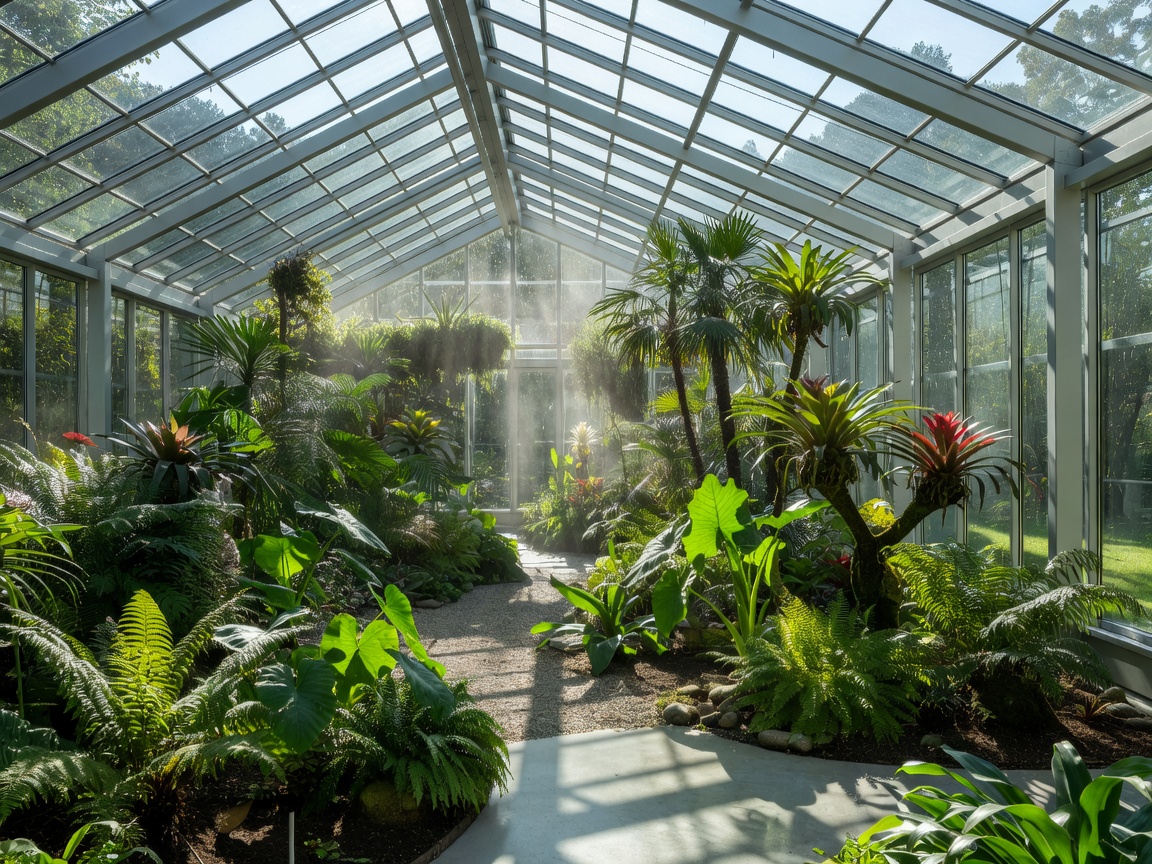
The modern Biodiversity Garden extends the Orto Botanico through a long glasshouse complex organised broadly by climatic zones. Tropical, subhumid, temperate and arid conditions establish a gradient rather than one undifferentiated indoor world. The architecture makes environmental transition part of the route. Changes in planting density, moisture and leaf form arrive in sequence.
This approach shifts the question from “What is this plant used for?” towards “How does this plant live here?” In warm humid zones, height and competition for light shape the display. As conditions become drier, spacing opens, leaves shrink or thicken, and water storage becomes visible in stems and tissues. Interpretation also connects biodiversity to human actions, food and environmental pressure. The newer garden speaks the language of ecosystems while the old garden preserves the grammar of identification.
How are the glasshouse climates managed?
The long glazed structure uses zoned environmental control. Solar energy contributes heat, while shading and ventilation limit overheating. Heating supports warmer zones in cold weather. Humidity, irrigation and airflow vary along the route, and the building form can assist with collecting energy and managing water. The precise settings are horticultural decisions that change with plant needs and outside conditions rather than fixed scenic effects.
Zoning brings a clear benefit: visitors can feel and see climate differences. It also creates boundaries that must be maintained. Warm moist air naturally moves towards cooler or drier space when openings permit it. Plant canopies further change local humidity and shade. The apparent simplicity of a climate sequence therefore depends on detailed work at vents, doors, roots and leaves.
How does Padua compare with Eden?
Both places use modern structures to explain climatic habitats, but their institutional stories differ sharply. Eden transformed a former clay extraction site into a public environmental destination with huge Biomes. Padua’s contemporary glasshouse is an extension of a university garden established for medicinal teaching in the Renaissance. At Eden, ecosystem narrative often leads. At Padua, the dialogue between old and new methods is the most distinctive feature.
Give each half of the Orto Botanico enough time to answer the other. In the historic enclosure, choose a few labelled plants and study how knowledge is ordered. In the Biodiversity Garden, follow changes in air, spacing and plant form. Consult the official visitor information for access and opening arrangements. The garden’s deepest pleasure comes from the gap between its two structures: centuries apart, yet both designed to make plants understandable.